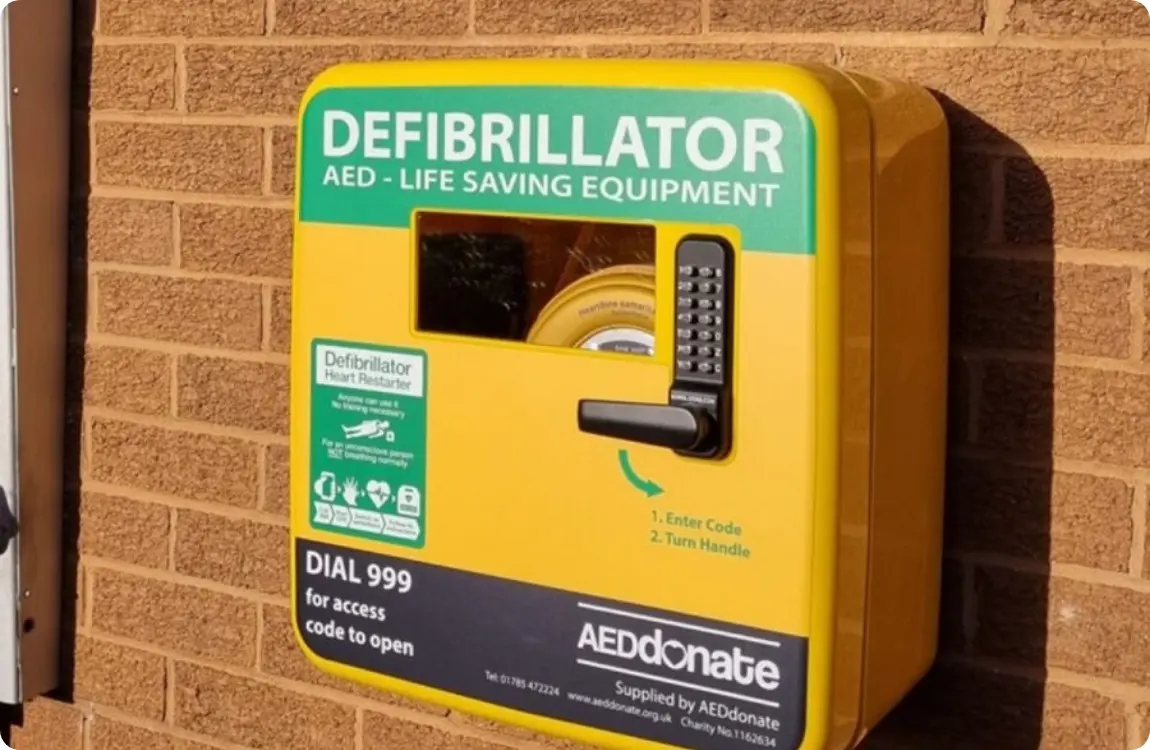
First of all, defibrillation is the most effective treatment for someone experiencing sudden cardiac arrest (SCA), particularly in cases involving shockable heart rhythms.
Unlike a heart attack, which is caused by a blocked artery, SCA is often triggered by abnormal heart rhythms known as arrhythmias.
These occur when the heart’s electrical system malfunctions and produces a chaotic heart rhythm that prevents blood from being pumped effectively to vital organs.
Arrhythmias can lead to a lack of oxygen supply to vital organs, which can be fatal if not corrected promptly.
The importance of early defibrillation.
In the event of a sudden cardiac arrest, time is critical when it comes to applying effective defibrillation. Simply put, for every minute that passes without defibrillation, the chances of survival drop by about 7-10%.
This means the longer it takes to administer defibrillation, the lower a person’s chances of survival. In other words, locating and using a defibrillator within the first few minutes after SCA occurs offers the best chance of saving someone’s life.
Preventing brain and organ damage.
Maintaining blood flow is essential in order to supply oxygen to the brain and other vital organs. When the heart stops pumping effectively during cardiac arrest, it only takes minutes for these organs to suffer damage.
Restoring normal heart rhythm.
Early defibrillation can help to reset the heart’s electrical activity, allowing it to resume a normal rhythm. This is essential for effective circulation and helps to minimise the risk of brain and organ damage.
Early defibrillation survival rates.
When administered within the first few minutes after sudden cardiac arrest, early defibrillation significantly increases the chances of survival, with rates as high as 70% or more. However, these chances decrease rapidly with every minute of delay.
The importance of a nearby defibrillator.
Once cardiac arrest is recognised and emergency services are contacted, cardiopulmonary resuscitation (CPR) should be started immediately. CPR helps to maintain blood circulation and oxygenation until a defibrillator is available.
In many cases, the shock provided by a defibrillator is necessary to restore normal heart function, making quick access to a nearby device critical.
Early defibrillation is crucial
All of the above factors highlight the importance of early defibrillation in increasing survival rates and reducing the risk of long-term complications. This builds a powerful case for making automated external defibrillators more widely available in public places.
Defibrillators are designed to be user-friendly and provide step-by-step instructions, enabling untrained bystanders to take life-saving action even before professional medical help arrives.
AEDs from AEDdonate
As a leading UK defibrillator charity, AEDdonate is dedicated to increasing access to life-saving Automated External Defibrillators and improving survival rates from cardiac arrest.
We are at the forefront of creating safer communities by ensuring defibrillators are available in the right place at the right time and always ready for rescue.
With ongoing support, we continue to drive change, ensuring that no one is ever too far from a life-saving defibrillator when they need it most.
Our vision is to equip every community with life-saving defibrillators and vital education – empowering people to act confidently in emergencies and improve survival rates.