If you’ve considered getting a defibrillator, you’ll already know what they’re used for, but may not know much about what they do, how to use one, or how much they cost.
In this blog we’ll look at each of those points in easy to understand language. What you learn might help save someone’s life.
What does a defibrillator do?
A defibrillator is a life-saving medical device that delivers an electric shock to the heart when someone experiences sudden cardiac arrest. (When their heart suddenly loses its normal rhythm.)
The electric shock can help restore a heart’s normal rhythm before paramedics arrive, dramatically improving someone’s chances of survival in those critical first few minutes.
A cardiac arrest can happen to anyone. With more than 40,000 out-of-hospital cardiac arrests in the UK each year, currently less than 1 in 10 survive.
Every minute without CPR and a defibrillator, reduces survival chances by up to 10%. (CPR stands for cardiopulmonary resuscitation). It involves chest compressions and rescue breaths (mouth-to-mouth resuscitation).
A bystander performing CPR and using an automated external defibrillator (AED) can increase the chances of survival by two to three-fold.
How much is a defibrillator?
The cost of a defibrillator can vary depending on the model and its features. Typically, defibrillators can cost between £800 and £2,500. Average defib costs can be between £850 and £1400 for an indoor defibrillator.
As well as the price of a defibrillator, you also need to think about how many you need, installation and running costs.
An indoor cabinet will cost around £90-£300. An outdoor cabinet £400-£600. Installation costs for an outdoor heated cabinet are £200-£250, with defibrillator pads and batteries costing anything from £20 to £300 to replace, depending on the model.
Pads and batteries will need to be replaced when they expire or when the pads have been used in a rescue.
When to use a defibrillator
If a person is unresponsive and not breathing normally, someone must call 999 or 112 and ask for an ambulance while you start CPR. The 999/112 emergency medical advisor will tell them where the nearest defibrillator is.
If you’re alone, use your phone’s hands-free speaker and begin CPR while calling emergency services.
How to use a defibrillator
Switch the defibrillator on and follow its instructions. Expose the patient’s bare chest, make sure it’s dry and apply the pads in the positions shown without stopping chest compressions.
The defibrillator will tell you to stop CPR while it analyses the heart’s rhythm, then tell you what to do next.
If the defibrillator says a shock is needed, tell people to stand back. The defibrillator will tell you when to press the shock button.
After the shock, the defibrillator will tell you to continue CPR for two minutes before it re-analyses. (If the defibrillator says no shock is needed, continue CPR for two minutes before the defibrillator re-analyses.)
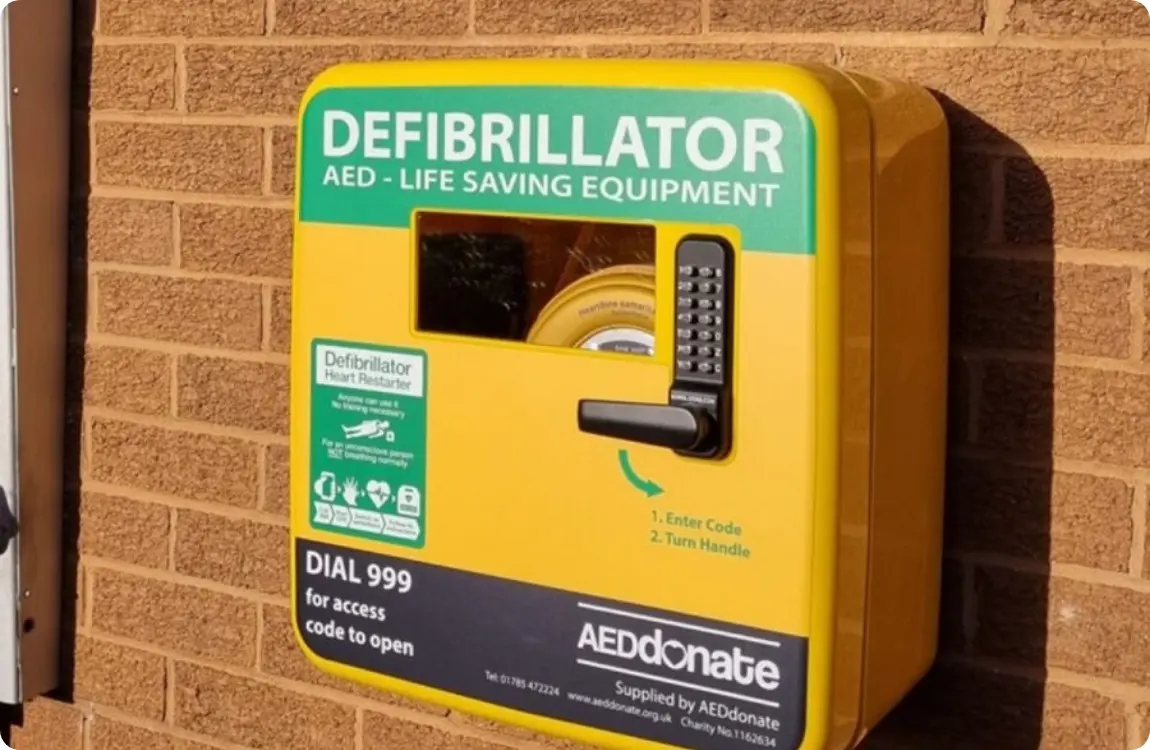
Community defibrillators are designed with simple instructions and most come with verbal and visual prompts making them even easier to use.
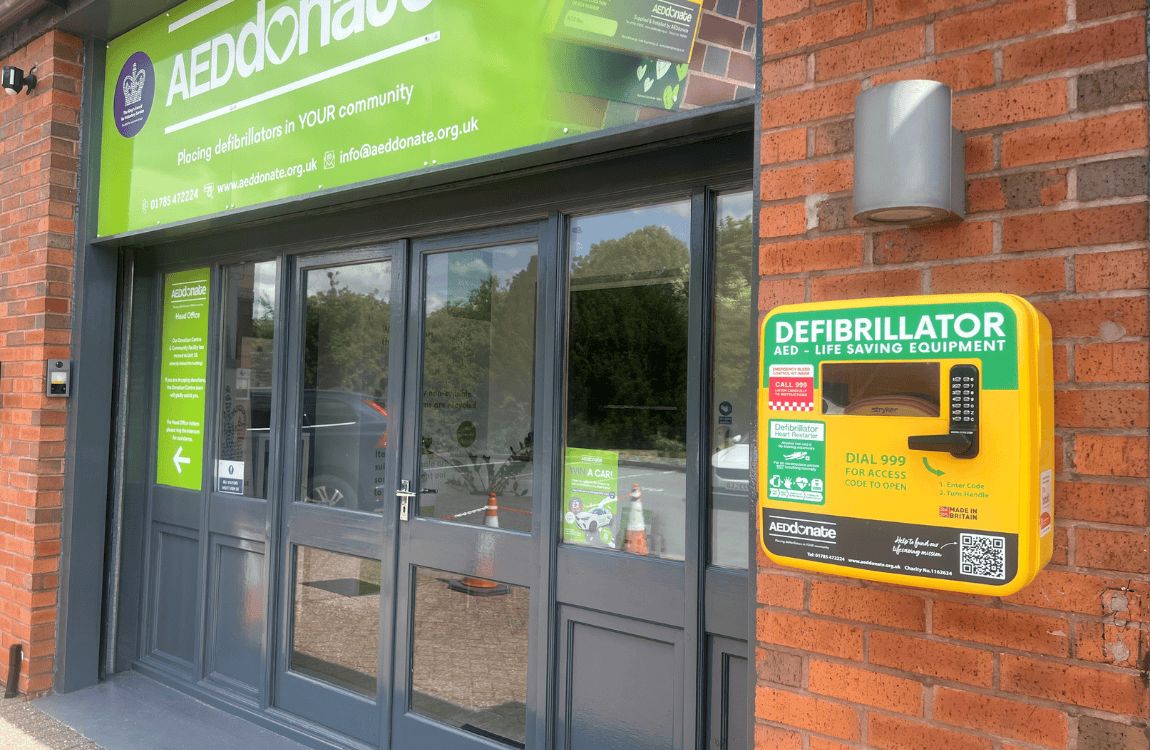
AEDdonate help communities fund, install, register, and maintain public access defibrillators, helping to ensure no one is ever too far from the help they need in the event of a sudden cardiac arrest.