During cardiac arrest, a person’s heart stops beating. When this happens, every second counts in what you do to help them survive.
Their best chance of making a good recovery is a series of four actions known as the chain of survival.
What are the four links in the chain of survival?
As its name suggests, the chain of survival is a critical series of four linked actions designed to help save someone’s life.
It involves first calling for expert help, then providing CPR followed by early defibrillation to restart the heart, and subsequent post resuscitation care to restore quality of life. These actions are all vital links in the chain.
The four links in more detail
Link 1: Recognising what has happened
The first link in the chain of survival is about recognising that someone has suffered a cardiac arrest, and immediately calling for help.
When someone suffers a cardiac arrest they will collapse. They may make some jerking movements and take gasping breaths as the body attempts to get oxygen into the lungs. They may also start to turn blue from lack of oxygen.
Link 2: Early CPR
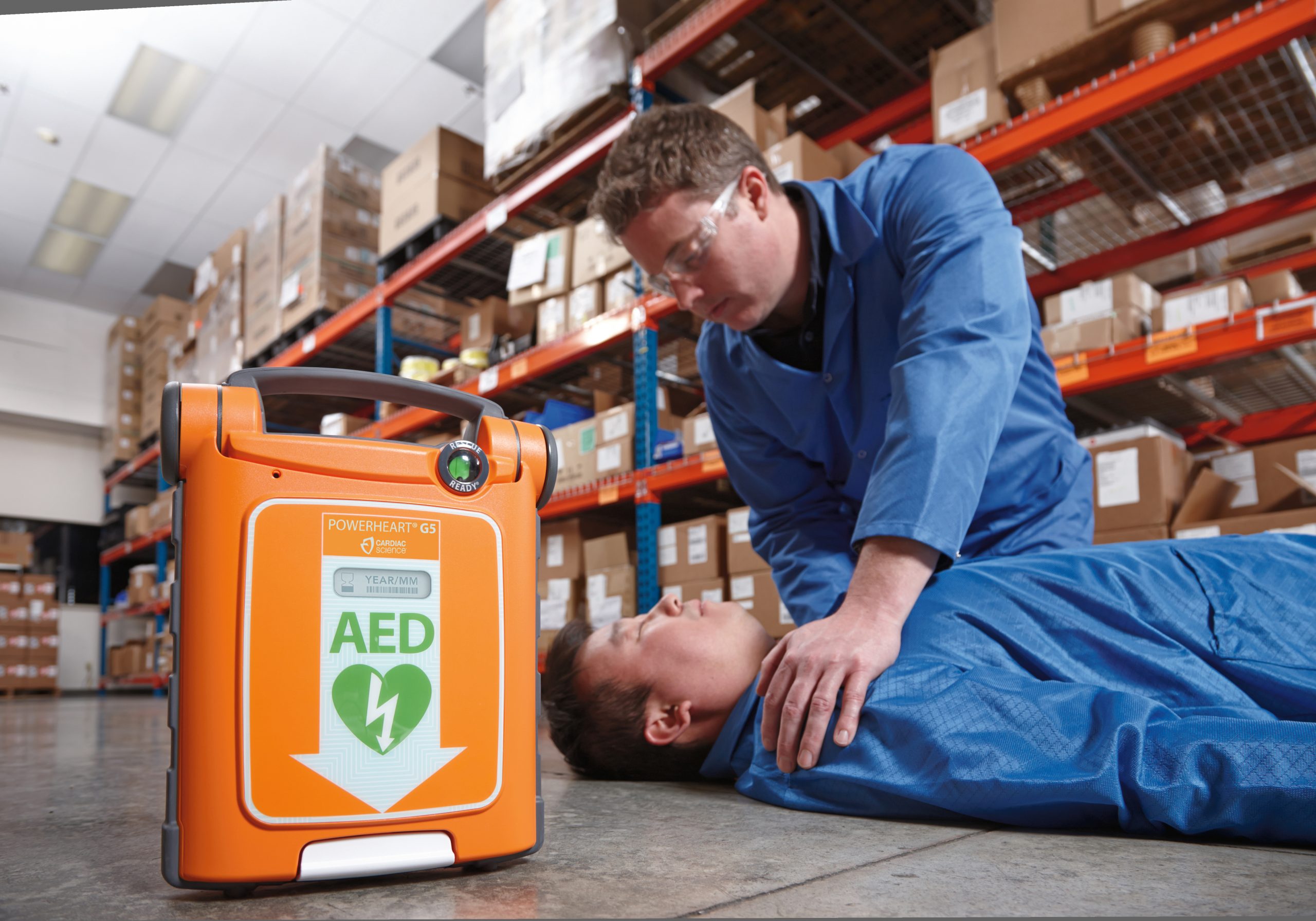
CPR (cardiopulmonary resuscitation) involves chest compressions and rescue breaths, also known as mouth-to-mouth resuscitation. You can choose whether or not to give rescue breaths. Hands-only CPR is highly effective and is the recommended method since the Covid-19 pandemic. However, if you feel comfortable, you may still give rescue breaths to a family member.
Once CPR is started, several things may occur which may be confusing or distressing but are quite normal. These may include ribs breaking, ongoing movements, eye-opening or vomiting.
Link 3: Defibrillation
When you have a defibrillator, switch it on and follow its instructions.
The defibrillator will tell you to stop CPR while it analyses the heart’s rhythm, then tell you what to do next.
If the defibrillator says a shock is needed, tell people to stand back. The defibrillator will tell you when to press the shock button.
After the shock, the defibrillator will tell you to continue CPR for two minutes before it re-analyses.
Link 4: Post resuscitation care
When the ambulance service arrives, they will be able to take over the care of the patient from those who have helped in those vital first few minutes. They may ask you to continue for a minute or so whilst they get their equipment ready.
Thereafter subsequent post resuscitation care will be administered to restore quality of life.
Why early defibrillation is important
Early defibrillation is crucial in sudden cardiac arrest, as it delivers a life-saving shock to restore the heart’s rhythm. When administered quickly, ideally within the first few minutes, it can dramatically increase survival rates. Combined with effective CPR, it also helps maintain blood flow to the brain, improving the chances of a good recovery.
A defibrillator can directly stop the chaotic electrical activity (ventricular fibrillation) that causes the heart to quiver instead of pump, making rapid treatment essential.