
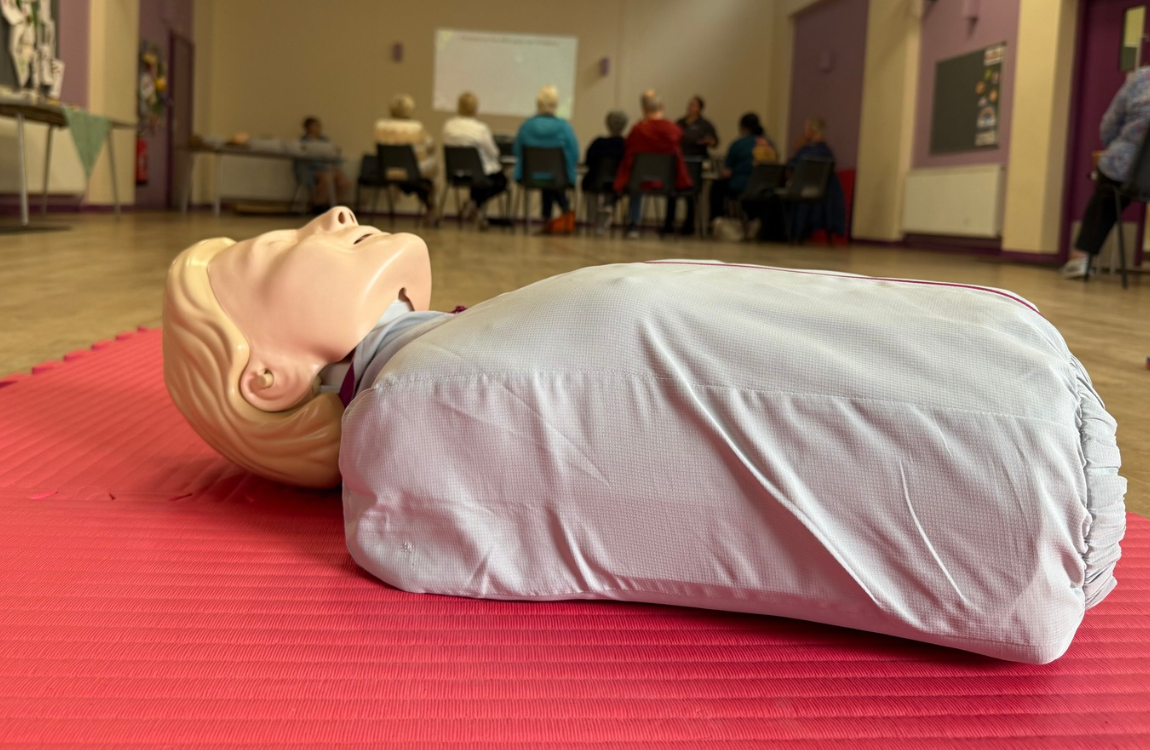
Every year, approximately 115,000 out-of-hospital cardiac arrests are reported to ambulance services across the UK. Resuscitation is attempted in around 43,000, yet fewer than 1 in 10 people survive an out-of-hospital cardiac arrest.
However, early intervention can make a life-saving difference. Defibrillation within 3-5 minutes of collapse may produce survival rates as high as 50-70%, particularly when the person has a shockable heart rhythm.
Find out why early defibrillation is so important.
What is sudden cardiac arrest?
Sudden cardiac arrest (SCA) is a life-threatening medical emergency that occurs when the heart suddenly stops pumping blood effectively around the body. It is usually caused by an electrical problem that disrupts the heart’s normal rhythm.
Some people experience warning signs beforehand, including chest discomfort, shortness of breath, feeling weak, light-headedness or dizziness. However, sudden cardiac arrest often happens without any warning.
One possible cause is a dangerous heart rhythm called ventricular fibrillation (VF). This causes the heart’s lower chambers to quiver rather than contract properly, meaning blood is no longer pumped effectively around the body. As a result, the brain and other vital organs are rapidly deprived of oxygen.
Without immediate treatment, cardiac arrest is fatal.
Signs of sudden cardiac arrest
When someone experiences sudden cardiac arrest, they will typically:
- Suddenly collapse.
- Become unconscious and unresponsive.
- Stop breathing normally or make occasional gasping, snorting or panting noises.
Gasping is not normal breathing and should not be mistaken for someone who is breathing normally.
If someone is unconscious and not breathing normally, you should assume they are having a cardiac arrest and act immediately.
Is sudden cardiac arrest different to a heart attack?
Yes. Although the two are often confused, a cardiac arrest and a heart attack are different medical emergencies.
A cardiac arrest happens when the heart suddenly stops pumping blood effectively, usually because of a dangerous electrical disturbance in its rhythm.
A heart attack happens when blood flow to part of the heart muscle becomes blocked, usually by a blood clot in one of the coronary arteries. Without a sufficient supply of oxygen-rich blood, the affected heart muscle can become damaged.
Although they are different conditions, a heart attack can trigger a cardiac arrest by causing a dangerous change in the heart’s rhythm.
Sudden cardiac arrest treatment
If someone collapses, becomes unresponsive and is not breathing normally, you must act immediately.
- Call 999. Ask for an ambulance and put your phone on speaker so you can follow the call handler’s instructions.
- Start CPR. Begin chest compressions immediately to help maintain blood flow to the brain and vital organs. Follow the 999 call handler’s instructions.
- Get a defibrillator. Ask someone nearby to find and bring the nearest public access defibrillator (AED). The ambulance service call handler can tell you where to find one.
- Use the defibrillator. Switch it on, attach the pads to the person’s bare chest as shown and follow the voice instructions.
You don’t need training to use a defibrillator. AEDs are designed to be used by members of the public and will analyse the person’s heart rhythm, only delivering a shock if one is needed.
Continue following the defibrillator’s instructions and the 999 call handler’s guidance until emergency services arrive.
Why do defibrillators matter so much?
When someone experiences a cardiac arrest, every second counts.
Early CPR helps maintain blood flow to the brain and vital organs, while early defibrillation can help restore an effective heart rhythm. The sooner a defibrillator is used, the greater the person’s chances of survival. Every minute matters, making quick access to a defibrillator crucial.
However, too many communities still lack access to a nearby public access defibrillator.
At AEDdonate, we’re working to change that. We believe every town, village and neighbourhood should have access to life-saving defibrillators and the confidence to use them.
Through our FIRM® approach – Fund, Install, Register and Maintain – we support communities to get defibrillators in place, ensure they are registered and help keep them maintained and available when needed.
Together, we can help more people survive sudden cardiac arrest and ensure that communities are better prepared to act when every second counts.
You might also be interested in…
Education
Sudden Cardiac Arrest: What Is It, What Are the Signs and How Can You Help?
12 November, 2026
Read the full story
Education
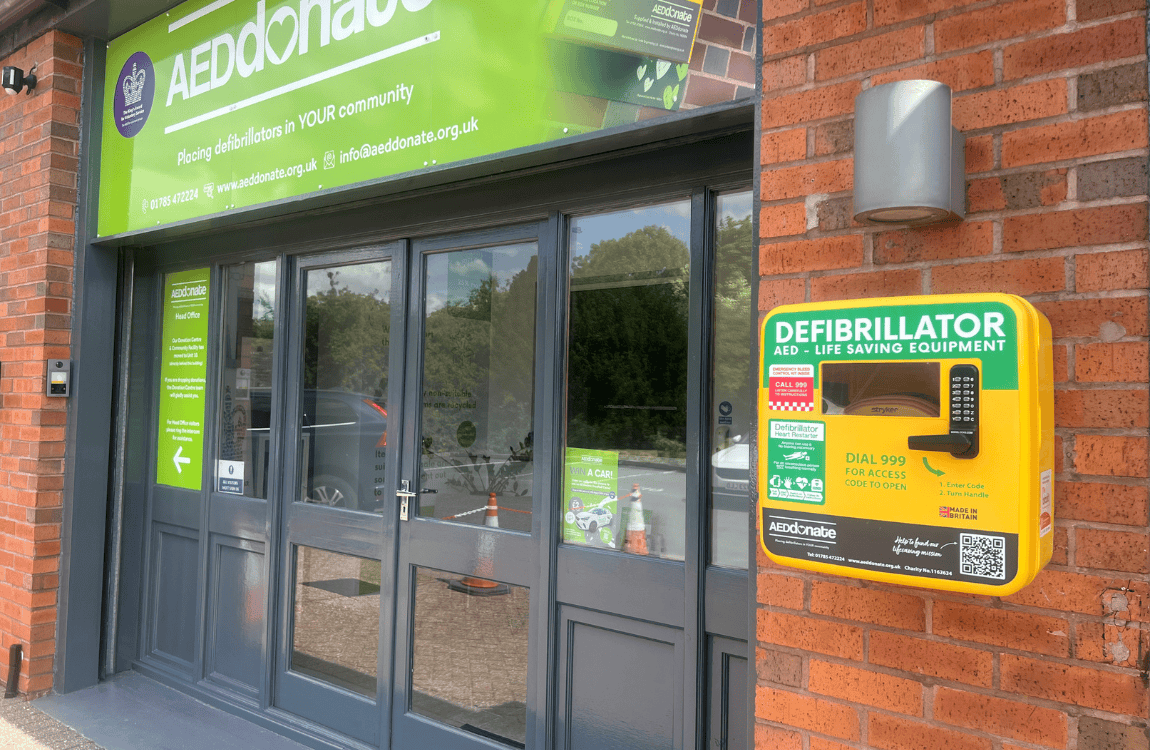
The AEDdonate F.I.R.M® approach to defibrillators
3 August, 2026
Read the full story
News
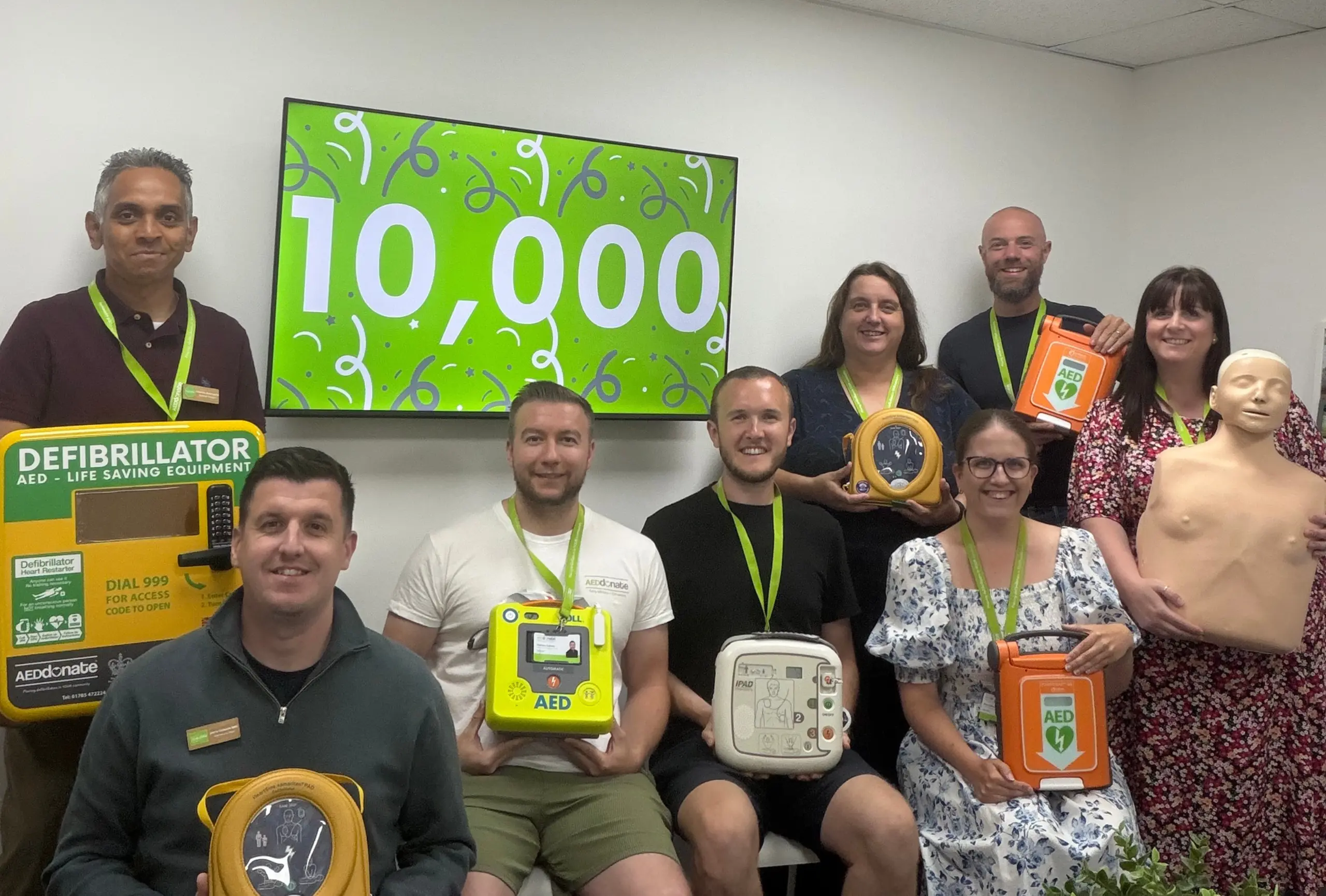
AEDdonate Celebrates Reaching 10,000 Locations Across the UK
31 July, 2026
Read the full story