
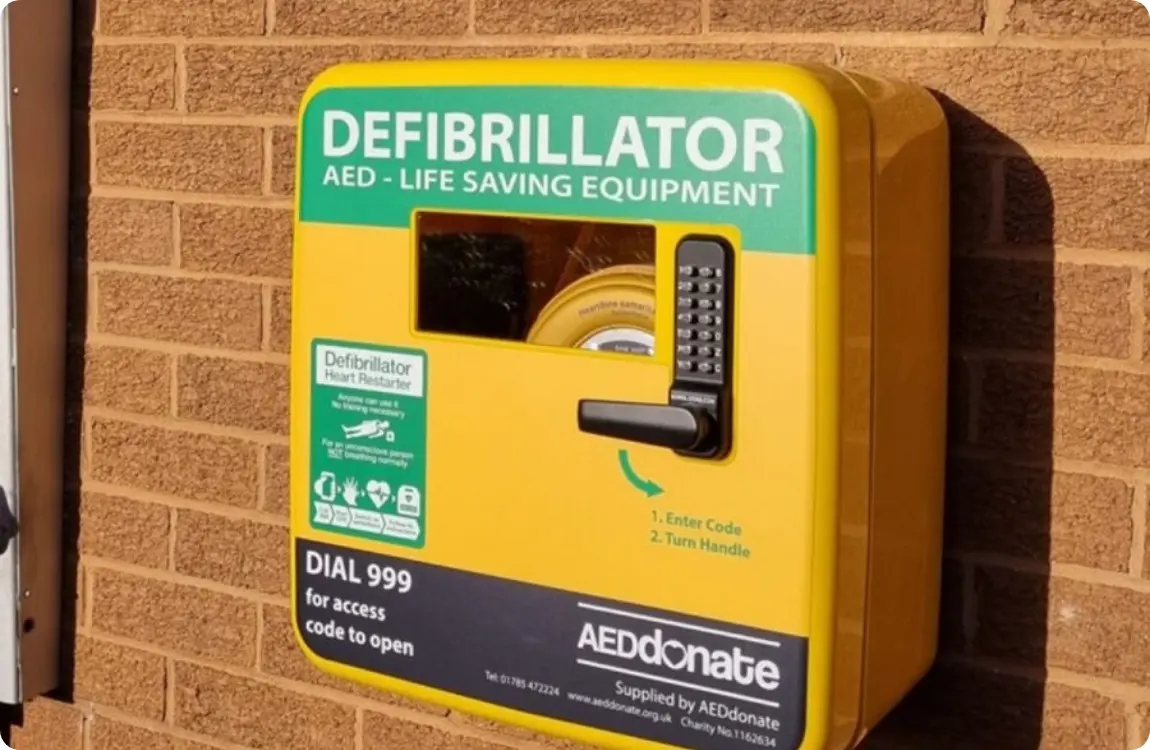
You’ve probably noticed defibrillators appearing in public places, outside buildings or inside spaces like shopping centres and airports. If so, you might have wondered exactly what they do and how they work.
While the thought of having to use one in an emergency may seem daunting, these few simple FAQs might help you make the difference between life and death for someone.
Frequently Asked Questions About Defibrillators
Q: What is a defibrillator?
A: A defibrillator is a life-saving medical device that delivers an electric shock to the heart when the heart stops beating effectively.
Q: What does a defibrillator do?
A: A defibrillator gives a jolt of energy to the heart, which can help restore the heart’s rhythm, and get it beating normally again after a cardiac arrest.
Q: What is a sudden cardiac arrest?
A: A sudden cardiac arrest (SCA) is a condition caused by an electrical malfunction in the heart which stops blood from pumping around the body.
Q: When would you need to use a defibrillator?
A: If a person has a sudden cardiac arrest (SCA), the normal heart rhythm becomes disrupted and disorganised, which means their heart can’t beat properly and they won’t be able to breathe normally.
Q: Is a defibrillator easy to use?
A: Yes, and doesn’t require training. When you switch the defibrillator on, it will provide clear instructions and talk you through what you need to do.
Q: Will a defibrillator harm the person suffering a cardiac arrest?
A: No, it will only give them a shock if and when it is needed.
Q: Why is a defibrillator important?
A: 30,000 out-of-hospital cardiac arrests happen each year in the UK, and 9 out of 10 of these are fatal. A defibrillator could be the difference between life and death for someone.
Q: What’s the difference between an automatic and a semi-automatic defibrillator?
A: Semi-automatic defibrillators ask the rescuer to press a button to deliver a shock if needed and when prompted. Fully automatic defibrillators automate this process and deliver the shock automatically, if needed.
Q: What’s the difference between a PAD and an AED?
A: PAD stands for Public Access Defibrillator – a defibrillator accessible to the public that asks for confirmation after it analyses the heart rhythms.
AED stands for Automated External Defibrillator which automatically analyses the heart rhythm and provides a shock during a cardiac arrest.
Q: Does a defibrillator need accessories?
A: Public defibrillators have all the necessary components you need to treat a sudden cardiac arrest.
Q: How much does a defibrillator cost?
A: An automated external defibrillator (AED) typically costs between £800 to £2,500. Advanced models with features like Wi-Fi or CPR feedback cost more. Average defib costs can be between £850 and £1400 for an indoor defibrillator.
Q: Where is your nearest defibrillator?
A: If you see someone suffering a cardiac arrest, ring 999 and ask for an ambulance. The call handler will tell you where your nearest defibrillator is. Alternatively, in a non-emergency situation you can find your nearest defibrillator by visiting www.defibfinder.uk
If you have any other questions about defibrillators, our telephone line is available around the clock for any urgent enquires. Alternatively, feel free to get in touch via our contact form if your query is not urgent. If you need to access a defibrillator in an emergency – always dial 999.

