
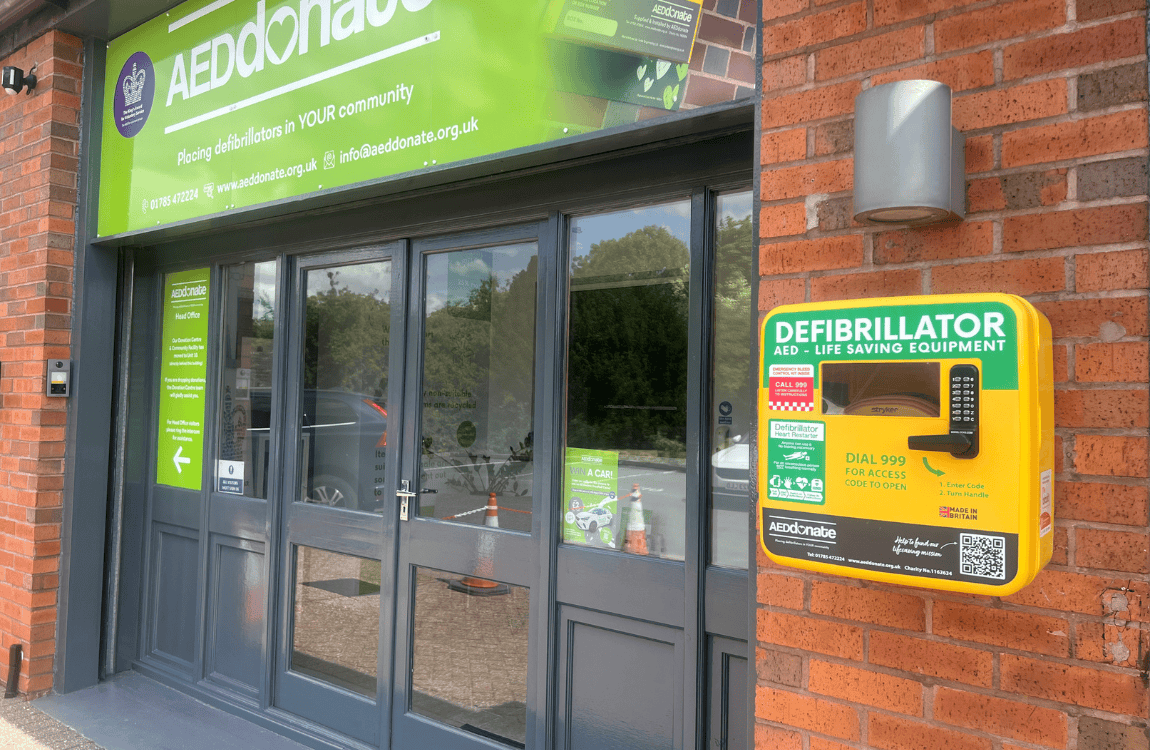
If you’ve considered getting a defibrillator (AED) for your workplace, school, sports club or community, you may already know how important they are. But there are a few things worth understanding before making a decision.
What does an AED do? When might someone need one? How easy are they to use? And what support is available once you’ve installed one?
In this guide, we’ll explain the essentials to help you make an informed decision.
Understanding how AEDs work
A defibrillator, also known as an Automated External Defibrillator (AED), is a portable medical device used to treat someone experiencing a sudden cardiac arrest.
During a cardiac arrest, the heart’s electrical activity can become disrupted. Some abnormal heart rhythms can be treated with an electrical shock delivered by a defibrillator.
The device analyses the person’s heart rhythm and only advises or delivers a shock when one is needed. It cannot restart every type of cardiac arrest, but when someone has a shockable rhythm, early defibrillation can make a significant difference.
Cardiac arrest remains a major public health issue in the UK.
Around 115,000 out-of-hospital cardiac arrests are reported to ambulance services each year. Resuscitation is attempted in approximately 43,000 cases, yet fewer than 1 in 10 people survive.
This is why having publicly accessible defibrillators is so important. Early CPR and access to a defibrillator can significantly improve someone’s chances of survival.
How much is a defibrillator?
The cost of a defibrillator can vary depending on the model and its features. Typically, defibrillators can cost between £800 and £2,500. Average defib costs can be between £850 and £1400 for an indoor defibrillator.
As well as the price of a defibrillator, you also need to think about how many you need, installation and running costs.
An indoor cabinet will cost around £90-£300. An outdoor cabinet £400-£600. Installation costs for an outdoor heated cabinet are £200-£250, with defibrillator pads and batteries costing anything from £20 to £300 to replace, depending on the model.
Pads and batteries will need to be replaced when they expire or when the pads have been used in a rescue.
Recognising a cardiac arrest
A defibrillator should be used when someone is unresponsive and not breathing normally. They may be experiencing a sudden cardiac arrest.
If you find someone in this situation, take these steps:
- Call 999 immediately. Put your phone on speaker so you can speak to the ambulance call handler.
- Check their breathing. The call handler will help you recognise whether they are breathing normally. Gasping, panting or slow, laboured breathing can be signs of cardiac arrest.
- Start CPR. If the person is unresponsive and not breathing normally, begin chest compressions straight away. Follow the call handler’s instructions.
- Get a defibrillator. Ask someone nearby to find and bring the nearest available AED while you continue CPR.
- Use the defibrillator. As soon as it arrives, switch it on, attach the pads and follow its spoken and visual instructions.
If you’re alone, call 999 and start CPR. Don’t leave the person to search for a defibrillator.
The defibrillator will analyse the person’s heart rhythm and tell you whether a shock is needed. Continue following its instructions and restart CPR whenever prompted.
Remember: You don’t need to wait for an ambulance to arrive before using a defibrillator. Early CPR and early defibrillation can make a vital difference.
How to use a defibrillator
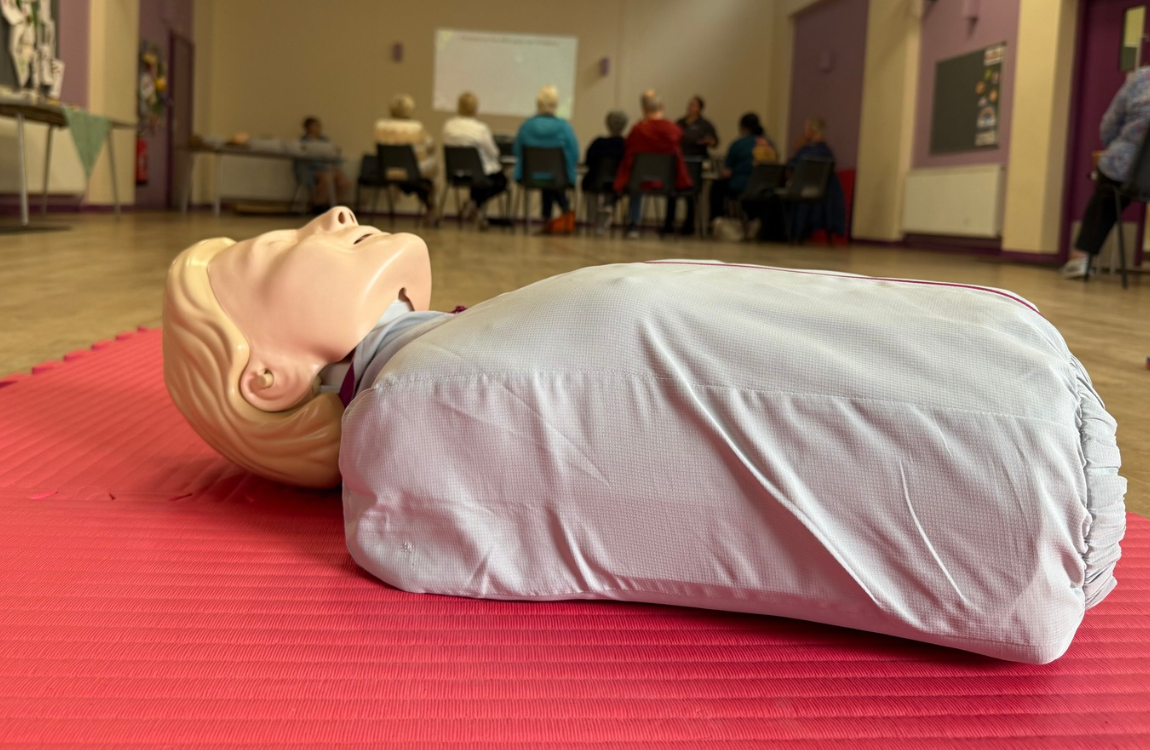
Public access defibrillators are designed to be used by members of the public. You don’t need to be a medical professional or have completed formal training.
When you switch on a defibrillator, it provides clear spoken and visual instructions to guide you through each step. Simply listen carefully and follow the prompts.
Using a defibrillator is straightforward:
- Switch it on: Open the case and press the power button if needed.
- Follow the instructions: The device will tell you what to do.
- Attach the pads: Expose the person’s chest and place the pads on bare skin, following the pictures on the pads.
- Allow the device to analyse: Make sure nobody touches the person while the defibrillator checks their heart rhythm.
- Follow the prompts: If a shock is advised, make sure everyone stands clear. Some devices deliver the shock automatically, while others ask you to press a button.
- Continue CPR: Restart chest compressions immediately after the shock, or if no shock is advised. Continue following the defibrillator’s instructions.
You cannot accidentally make a defibrillator deliver a shock when one isn’t needed. The device analyses the heart rhythm and only advises or delivers a shock when appropriate.
The most important thing is to act. Don’t let fear of using a defibrillator stop you from helping someone.
Support for your community
Getting an AED for your workplace, school, sports club or community is an important step towards improving access to life-saving equipment.
But knowing how to fund, install, register and maintain your defibrillator is just as important.
At AEDdonate, we support, provide and educate communities to help make defibrillators more accessible.
Our FIRM approach stands for:
- Fund: We help communities explore fundraising opportunities and access financial support towards a defibrillator.
- Install: We help ensure defibrillators are installed in suitable, visible and accessible locations.
- Register: We help register defibrillators on The Circuit, the national defibrillator network, so ambulance services can locate them in an emergency.
- Maintain: We provide ongoing support, guidance and replacement supplies to help keep defibrillators in good working condition.
We also offer free online defibrillator awareness sessions, helping people understand how defibrillators work and feel more confident about using one.
Whether you’re looking to provide a defibrillator for your workplace, school, sports club or wider community, we’re here to help you through the process.
Find out more about how AEDdonate can support your community, or get in touch with our team
You might also be interested in…
Education
Sudden Cardiac Arrest: What Is It, What Are the Signs and How Can You Help?
12 November, 2026
Read the full story
Education
The AEDdonate F.I.R.M® approach to defibrillators
3 August, 2026
Read the full story
News
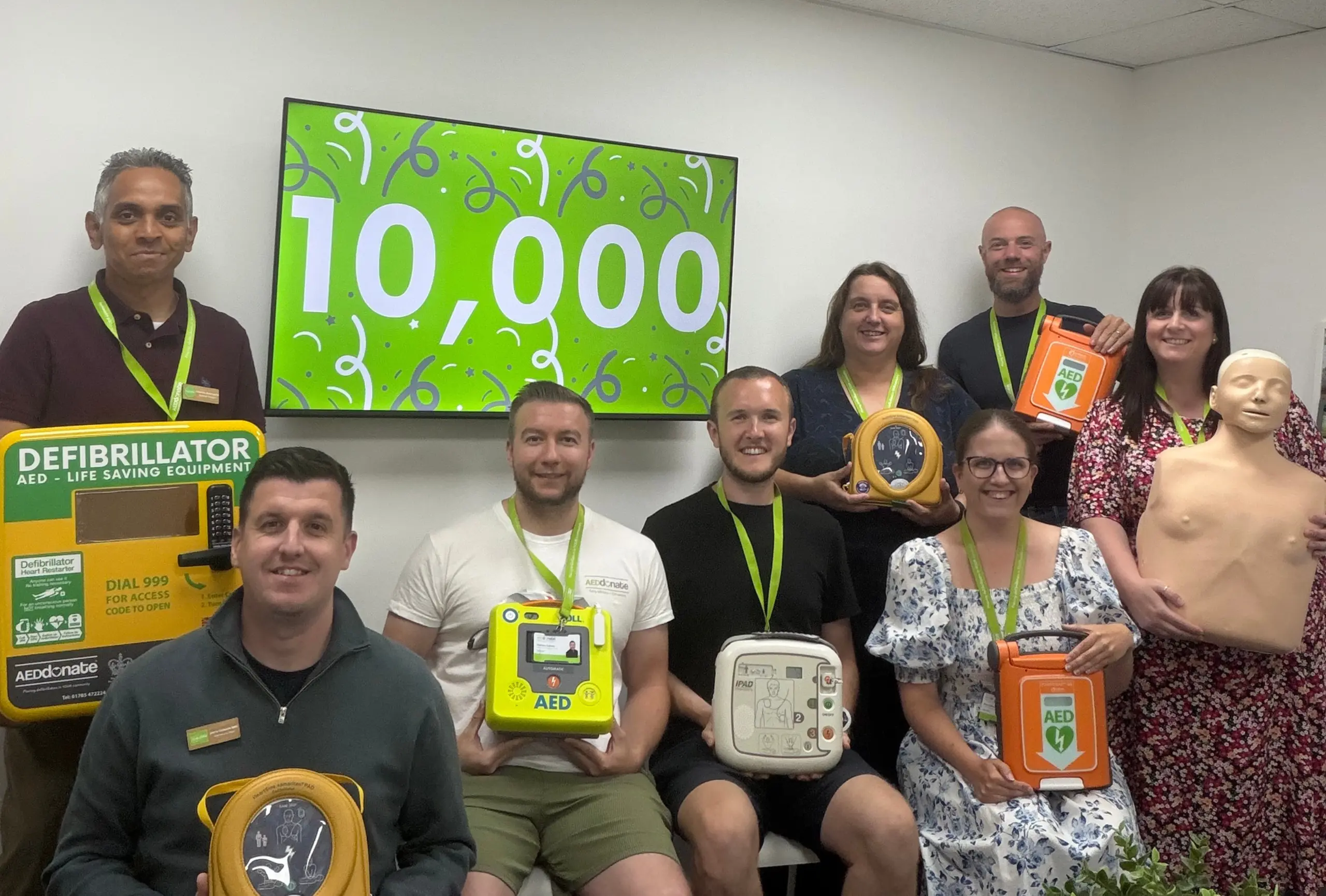
AEDdonate Celebrates Reaching 10,000 Locations Across the UK
31 July, 2026
Read the full story